length
36,836 words
a few pages a day
~8 min
finished in
20 days
full read
2h 33m
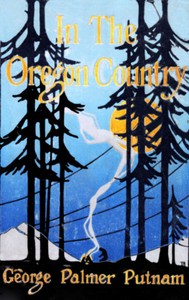
At Folio's default of ten pages a day, you finish In the Oregon Country in about 20 days — roughly 8 minutes of reading each morning.
The opening
the first pages of In the Oregon Country, free
When one has lived in Oregon for forty-three years, and when one's enthusiasm for his home increases year after year, naturally all that is said of that home is of the most vital interest. Especially is it acceptable if it is the outgrowth of a similar enthusiasm, and if it is well said.
For a considerable span of time I have been reading what others have written about the Pacific Coast. In the general western literature, it has seemed to me, Oregon has never received its merited share of consideration. Just now, with the Expositions in California attracting a worldwide interest westward, and with the Panama Canal giving our development a new impetus, it is especially appropriate that Oregon receive added literary attention. And it is reasonable to suppose that the stranger within our gates will find interest in such literature, provided it be of the right sort, just as Oregonians must welcome a sound addition to the State's bibliography, written by an Oregonian.
So, because I like the spirit of the following pages, admire the method of their presentation, and deeply desire to promote the success of all that will tend toward a larger appreciation of Oregon's possibilities, I recommend this book to the consideration of dwellers on the Pacific Coast, and those who desire to form acquaintance with the land it concerns.
[Illustration: hand written signature]
Governor of Oregon.
SALEM, OREGON,
January 20th, 1915.
PREFACE
Often enough a preface is an outgrowth of disguised pretentiousness or insincere humility. Presumably it is an apology for the authorship, or at least an explanation of the purpose of the pages it introduces.
But no one is compelled to write a book; and, in truth, publishers habitually exert a contrary influence. It is a fair supposition, therefore, when a book is produced, that the author has some good reason for his act, whether or not the book itself proves to be of service.
Among many plausible apologies for authorship, the most reasonable is, it seems to me, a genuine enthusiasm for the subject at hand. If one loves that with which the book has to do the desire to share the possession with readers approaches altruism. In this case let us hope that the enthusiasm, which is real, and the virtue, which is implied, will sufficiently cloak the many faults of these little sketches, whose mission it is to convey something of the spirit of the out-of-door land they picture--a land loved by those who know it, and a land of limitless welcome for the stranger who will knock at its gates.
The Oregon Country, with which these chapters are chiefly concerned, has been the goal of expeditioning for a century and a quarter. First came Captain Robert Gray in 1792, by sea. Meriwether Lewis and William Clark, twelve years later, tracked 'cross country from the Missouri to the mouth of the Columbia. In 1810, the Astor expedition, under Wilson and Hunt, succeeded, after hardships that materially reduced the party, in making its way from St. Louis to the Columbia and down the river to the mouth, where was founded the town of Astoria. Finally, after a half-century of horse-and-wagon pioneering, the first railroads spanned the continent in 1869. But the Union Pacific and Central Pacific were more the concern of California than of Oregon, for the Northwest had no iron trail to link it with the parent East until in 1883 the Northern Pacific Railway, under the leadership of Henry Villard, reached Portland.
So Oregon was discovered by sea and land, and finally, as highways of steel replaced the dusty trails of the emigrants, she has come into her own. From within and without she has builded, and what she has done for her sons, and offers to her settlers, has established a place for her in the respectful attention of the world.
Keep going from exactly here — Folio remembers your place and serves the next portion tomorrow.
continue reading In the Oregon CountryAbout this free edition
In the Oregon Country by George Palmer Putnam (1887-1950) is free to read in full. Folio serves it in daily portions you can actually finish, tracks your streak and reading position across devices, and reads every page aloud with a built-in narrator. The text comes from Project Gutenberg.
More like In the Oregon Country
The History of the Peloponnesian War
Folio
The History of the Peloponnesian War
Thucydides
The History of Herodotus
Folio
The History of Herodotus
Herodotus
The Gallic Wars
Folio
The Gallic Wars
Julius Caesar
Anabasis
Folio
Anabasis
Xenophon
The Lives of the Twelve Caesars
Folio
The Lives of the Twelve Caesars
Suetonius
Germania
Folio
Germania
Tacitus
The History of the Decline and Fall of the Roman Empire
Edward Gibbon
The Travels of Marco Polo
Marco Polo