Hero Tales
Folio
length
39,298 words
a few pages a day
~8 min
finished in
21 days
full read
2h 44m
At Folio's default of ten pages a day, you finish Hero Tales in about 21 days — roughly 8 minutes of reading each morning.
The opening
the first pages of Hero Tales, free
In the world's literature there are certain stories which, told ages ago, can never be forgotten. They have within them that which gives pleasure to all intelligent men, women and children. They appeal to the sympathies, the desires, and the admiration of all sorts and conditions of mankind. These are the stories that are said to be immortal. They have been repeated and re-repeated in many forms and to all kinds of audiences. They have been recited and sung in royal palaces, in the halls of mediaeval castles, and by the camp fires of warring heroes. Parents have taught them to their children, and generation after generation has preserved their memory. They have been written on parchment and printed in books, translated into many languages, abridged, extended, edited, and "adapted." But through all these changes and the vicissitudes of time, they still preserve the qualities that have made them so universally popular.
Chief among these masterpieces of imagination are the tales of gods and heroes that have come down to us from the golden age of Greece, and particularly the tales of Troy that cluster around the narratives of old Homer in his "Iliad" and "Odyssey." Three thousand years or more have passed since they were first recited, and yet they have lost none of their original charm. Few persons of intelligence are unacquainted with these tales, for our literature abounds in allusions to them; and no one who pretends to the possession of culture or learning can afford to be ignorant of them.
Second only in interest, especially to us of Anglo-Saxon descent, are the hero tales of the ancient North and the stirring legends connected with the "Nibelungen Lied." Of much later origin than the Greek stories, and somewhat inferior to them in refinement of thought and delicacy of imagery, these tales partake of the rugged, forceful character of the people among whom they were composed. Yet, with all their austerity and sternness, they are replete with vivid action, and they charm us by their very strength and the lessons which they teach of heroic endurance and the triumph of eternal justice.
Scarcely inferior to these latter, but not so well known to English-speaking people, are the tales of knighthood and chivalry that commemorate the romantic deeds of Charlemagne and his paladins. Written in various languages, and at periods widely separated, these tales present a curious mixture of fact and fiction, of the real and the marvellous, of the beautiful and the grotesque, of pagan superstition and Christian devotion. Although there were, in truth, no knights in the time of Charlemagne, and the institution of chivalry did not exist until many years later, yet these legends are of value as portraying life and manners in that period of history which we call the Dark Ages; and their pictures of knightly courage and generosity, faithfulness, and loyalty, appeal to our nobler feelings and stir our hearts with admiration.
To know something of these three great cycles, or groups, of classic and romantic stories--the hero tales of Troy, those of the ancient North, and those of Charlemagne--is essential to the acquirement of refined literary tastes. For this knowledge will go far toward helping its possessor to enjoy many things in our modern literature that would otherwise be puzzling or obscure. The importance, therefore, of placing some of the best of such tales early within the reach of school children and all young readers cannot be disputed.
In three volumes somewhat larger than the present one--"A Story of the Golden Age," "The Story of Siegfried," and "The Story of Roland"--I have already endeavored to introduce young readers to the most interesting portions of these great cycles of romance, narrating in each the adventures of the hero who is the central figure in the group of legends or tales under consideration. The present volume, made up of selections from these earlier books, has been prepared in response to repeated suggestions that certain portions of them, and especially some of the independent shorter stories, are well adapted to use in reading-classes at school. Of the seventeen stories herein presented, nine are from the "Golden Age," four from "Siegfried," and four from "Roland." They are, for the most part, episodes, complete in themselves, and connected only by a slender thread with the main narrative. Their intrinsic value is in no way diminished by being thus separated from their former setting, and each tale being independent of the others, they lend themselves more readily to the demands of the schoolroom.
Keep going from exactly here — Folio remembers your place and serves the next portion tomorrow.
continue reading Hero TalesAbout this free edition
Hero Tales by James Baldwin (1841-1925) is free to read in full. Folio serves it in daily portions you can actually finish, tracks your streak and reading position across devices, and reads every page aloud with a built-in narrator. The text comes from Project Gutenberg.
More like Hero Tales
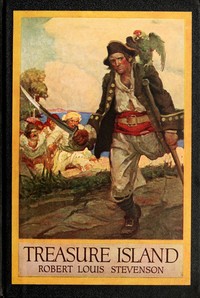
Treasure Island
Robert Louis Stevenson
Kidnapped
Robert Louis Stevenson
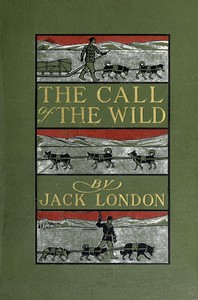
The Call of the Wild
Jack London
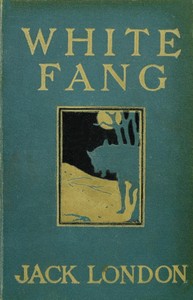
White Fang
Jack London
The Sea-Wolf
Jack London
The Count of Monte Cristo
Alexandre Dumas
The Three Musketeers
Folio
The Three Musketeers
Alexandre Dumas
Robinson Crusoe
Folio
Robinson Crusoe
Daniel Defoe