Fighting the Flames
Folio
length
90,758 words
a few pages a day
~8 min
finished in
48 days
full read
6h 18m
At Folio's default of ten pages a day, you finish Fighting the Flames in about 48 days — roughly 8 minutes of reading each morning.
The opening
the first pages of Fighting the Flames, free
________________________________________________________________________ This is one of the books by Ballantyne in which he describes one of the main institutions of British life--the Fire Brigade. Of course he wraps a good story into this description, but you come away with a good idea of how the Fire Brigade functioned in those days. Bear in mind that there were no motors--the fire-engines were drawn by galloping horses. There were no telephones, and the alarm was raised by someone running to the fire station. More than that, there was a system for alerting any adjacent fire stations, so that better cover could be given to the district as a whole. The power for the pumps was from men, and to rescue anyone the fireman had to ascend a ladder, hunt for the person, and carry him or her back down the ladder, all done with unsophisticated gear. Injuries to firemen, or even their death, were frequent.
We are also introduced to the floating fire engine, that could attend a fire by the river-side, usually in one of the very vulnerable ware- houses.
________________________________________________________________________ FIGHTING THE FLAMES, BY R.M. BALLANTYNE.
CHAPTER ONE.
HOW THE FIGHT BEGAN.
One's own fireside is, to all well-regulated minds, a pleasant subject of contemplation when one is absent, and a source of deep gratification when present.
Especially may this be said to be the case in a cold, raw night in November, when mankind has a tendency to become chronically cross out of doors, and nature, generally, looks lugubrious; for, just in proportion as the exterior world grows miserably chill, the world "at home," with its blazing gas, its drawn curtains, its crackling fires, and its beaming smiles, becomes doubly comfortable and cosy.
Even James Auberly, pompous, stern, and ungenial though he was, appeared to entertain some such thoughts, as he sat by his own fireside, one such night, in his elegant mansion in Beverly Square, Euston Road, London; and smiled grimly over the top of the Times newspaper at the fire.
Mr Auberly always smiled--when he condescended to smile--grimly. He seldom laughed; when he did so he did it grimly too. In fact, he was a grim man altogether; a gaunt, cadaverous, tall, careworn, middle-aged man--also a great one. There could be no question as to that; for, besides being possessed of wealth, which, in the opinion of some minds, constitutes greatness, he was chairman of a railway company, and might have changed situations with the charwoman who attended the head office of the same without much difference being felt. He was also a director of several other companies, which, fortunately for them, did not appear to require much direction in the conduct of their affairs.
Mr Auberly was also leader of the fashion, in his own circle, and an oracle among his own parasites; but, strange to say, he was nobody whatever in any other sphere. Cabmen, it is true, appeared to have an immense respect for him on first acquaintance, for his gold rings and chains bespoke wealth, and he was a man of commanding presence, but their respect never outlived a first engagement. Cabmen seldom touched their hats to Mr Auberly on receiving their fare; they often parted from him with a smile as grim as his own, and once a peculiarly daring member of the fraternity was heard blandly to request him to step again into the cab, and he would drive him the "nine hundred and ninety-ninth part of an inch that was still doo on the odd sixpence." That generous man even went further, and, when his fare walked away without making a reply, he shouted after him that "if he'd only do 'im the honour to come back, he'd throw in a inch an' a half extra for nothink." But Mr Auberly was inexorable.
Keep going from exactly here — Folio remembers your place and serves the next portion tomorrow.
continue reading Fighting the FlamesAbout this free edition
Fighting the Flames by R. M. Ballantyne (1825-1894) is free to read in full. Folio serves it in daily portions you can actually finish, tracks your streak and reading position across devices, and reads every page aloud with a built-in narrator. The text comes from Project Gutenberg.
More like Fighting the Flames
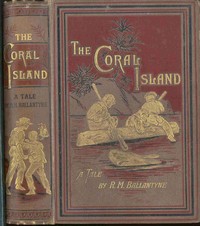
The Coral Island
R. M. Ballantyne

The Dog Crusoe and His Master
R. M. Ballantyne

The Lighthouse
R. M. Ballantyne
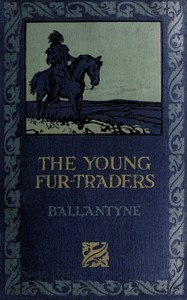
The Young Fur-Traders
R. M. Ballantyne
Martin Rattler
Folio
Martin Rattler
R. M. Ballantyne
Hudson Bay
Folio
Hudson Bay
R. M. Ballantyne
The Pioneers
Folio
The Pioneers
R. M. Ballantyne
Blown to Bits
Folio
Blown to Bits
R. M. Ballantyne