Farthest North
Folio
length
126,041 words
a few pages a day
~8 min
finished in
67 days
full read
8h 45m
At Folio's default of ten pages a day, you finish Farthest North in about 67 days — roughly 8 minutes of reading each morning.
The opening
the first pages of Farthest North, free
The Author had not originally contemplated the publication of the colored sketches which are produced in this work. He has permitted their reproduction because they may be useful as showing color effects in the Arctic; but he wishes it understood that he claims no artistic merit for them.
FARTHEST NORTH
CHAPTER I
INTRODUCTION
"A time will come in later years when the Ocean will unloose the bands of things, when the immeasurable earth will lie open, when seafarers will discover new countries, and Thule will no longer be the extreme point among the lands."--Seneca.
Unseen and untrodden under their spotless mantle of ice the rigid polar regions slept the profound sleep of death from the earliest dawn of time. Wrapped in his white shroud, the mighty giant stretched his clammy ice-limbs abroad, and dreamed his age-long dreams.
Ages passed--deep was the silence.
Then, in the dawn of history, far away in the south, the awakening spirit of man reared its head on high and gazed over the earth. To the south it encountered warmth, to the north, cold; and behind the boundaries of the unknown it placed in imagination the twin kingdoms of consuming heat and of deadly cold.
But the limits of the unknown had to recede step by step before the ever-increasing yearning after light and knowledge of the human mind, till they made a stand in the north at the threshold of Nature's great Ice Temple of the polar regions with their endless silence.
Up to this point no insuperable obstacles had opposed the progress of the advancing hosts, which confidently proceeded on their way. But here the ramparts of ice and the long darkness of winter brought them to bay. Host after host marched on towards the north, only to suffer defeat. Fresh ranks stood ever ready to advance over the bodies of their predecessors. Shrouded in fog lay the mythic land of Nivlheim, where the "Rimturser" [1] carried on their wild gambols.
Why did we continually return to the attack? There in the darkness and cold stood Helheim, where the death-goddess held her sway; there lay Nåstrand, the shore of corpses. Thither, where no living being could draw breath, thither troop after troop made its way. To what end? Was it to bring home the dead, as did Hermod when he rode after Baldur? No! It was simply to satisfy man's thirst for knowledge. Nowhere, in truth, has knowledge been purchased at greater cost of privation and suffering. But the spirit of mankind will never rest till every spot of these regions has been trodden by the foot of man, till every enigma has been solved.
Minute by minute, degree by degree, we have stolen forward, with painful effort. Slowly the day has approached; even now we are but in its early dawn; darkness still broods over vast tracts around the Pole.
Our ancestors, the old Vikings, were the first Arctic voyagers. It has been said that their expeditions to the frozen sea were of no moment, as they have left no enduring marks behind them. This, however, is scarcely correct. Just as surely as the whalers of our age, in their persistent struggles with ice and sea, form our outposts of investigation up in the north, so were the old Northmen, with Eric the Red, Leif, and others at their head, the pioneers of the polar expeditions of future generations.
It should be borne in mind that as they were the first ocean navigators, so also were they the first to combat with the ice. Long before other seafaring nations had ever ventured to do more than hug the coast lines, our ancestors had traversed the open seas in all directions, had discovered Iceland and Greenland, and had colonized them. At a later period they discovered America, and did not shrink from making a straight course over the Atlantic Ocean, from Greenland to Norway. Many and many a bout must they have had with the ice along the coasts of Greenland in their open barks, and many a life must have been lost.
Keep going from exactly here — Folio remembers your place and serves the next portion tomorrow.
continue reading Farthest NorthAbout this free edition
Farthest North by Fridtjof Nansen (1861-1930) is free to read in full. Folio serves it in daily portions you can actually finish, tracks your streak and reading position across devices, and reads every page aloud with a built-in narrator. The text comes from Project Gutenberg.
More like Farthest North
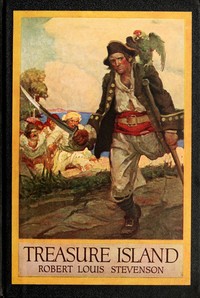
Treasure Island
Robert Louis Stevenson

Kidnapped
Robert Louis Stevenson
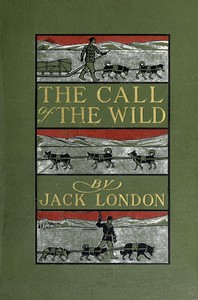
The Call of the Wild
Jack London
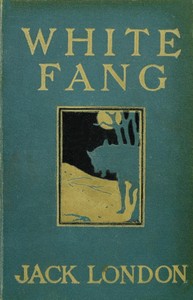
White Fang
Jack London
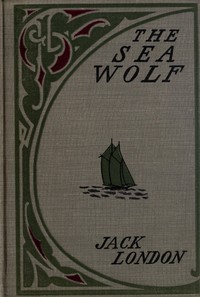
The Sea-Wolf
Jack London

The Count of Monte Cristo
Alexandre Dumas
The Three Musketeers
Folio
The Three Musketeers
Alexandre Dumas
Robinson Crusoe
Folio
Robinson Crusoe
Daniel Defoe