"Farewell"
Folio
length
13,317 words
a few pages a day
~8 min
finished in
8 days
full read
55 min
At Folio's default of ten pages a day, you finish "Farewell" in about 8 days — roughly 8 minutes of reading each morning.
The opening
the first pages of "Farewell", free
I am an orphan. My father, who was a curate in the Church of England, died when I was sixteen years of age, leaving me totally unprovided for. I need not trouble the reader with the vicissitudes of fortune which left me, when I was entering my twenty-second year, a shopman in the establishment of Mr. John Conder, hosier and outfitter, of Holborn. I had been a clerk in a city firm; but the firm failed. For some months after that I was out of employment. At last I was compelled to enter Mr. Conder's service. I had been with him for two years, acting as salesman, errand-boy--anything, when one day an accident changed the whole course of my life.
* * * * *
It was about three o'clock on a broiling July afternoon, 187-. I had to leave a parcel at the Langham Hotel, and another at a house in Wimpole Street. Having discharged my mission at the Langham Hotel, I crossed Portland Place and turned down Chandos Street to get into Cavendish Square. Chandos Street is a very quiet street; and as I turned the corner of the Langham Hotel the only person I could see before me was a tall young lady with a very graceful and aristocratic carriage, who was walking in the direction that I was going. She was just under the tree that grows by the Langham Hotel opposite to the Medical Society of England, when she put her hand in one of those large pockets that ladies wear at the back of their dresses to take out her handkerchief. In taking out the handkerchief, she unconsciously dropped a blue velvet purse on the pavement, and walked on without noticing it. I immediately ran forward and picked it up, and came up to her, with the parcel under my left arm and the purse in my right hand, saying:
"I beg your pardon, madam; you have dropped your purse."
"Miss" would have been the expression that most men in my position would have used; but I had a habit of saying ma'am, or madam, to ladies.
She started at being spoken to, but recovering herself at once said, in a very clear but soft and musical voice:
"Oh, thank you so very much. There are papers in it of great importance."
I put the purse in her hands, which I could not help noticing were very long and slender. She put down her parasol, and opened it, and having given in an instant a glance at a compartment in the purse in which there were some papers, and a glance at me, she took out what I could see must be several sovereigns, and said:
"The purse was of great importance to me on account of some papers that it contains. I would willingly have given a large reward for it. Will you allow me to offer you this for your kindness in restoring it to me? You cannot think how much obliged I am to you."
All this was said in the same clear and silvery tone, but with a diffident and apologetic manner, as if she were conscious that she was running the risk of giving offense. Perhaps it was this that affected me. Had she spoken in the way in which people usually do when they give such rewards, I should possibly have taken the shining sovereigns that she held in her slender hand, and there the matter would have ended. But there was something in the way in which she addressed me that touched me to the quick. She seemed, so at least I imagined, to feel that she was speaking to one that had belonged to her own class, to one at least to whom some apology was due for making him such an offer. Besides this, it was, perhaps, the first time in my life since I had grown up that I had ever spoken to a lady except on a mere matter of business. But here was a beautiful, refined, high-bred girl, speaking to me not merely as an equal, but actually in a tone of almost supplication. Beautiful? I took that on trust. Her slender, graceful figure was clad in a rich but simple polonaise that showed its lovely contour to perfection. The upper part of her face was hidden, at least from my diffident gaze, by a rather heavy veil; but the piquant chin, the shining teeth, and mobile lips, with the transparency of her complexion, were enough. There are times when we experience the thoughts and emotions of a lifetime in a moment. That I was a gentleman by birth I had never forgotten--I was prevented from doing so by the contrast between my present and my past surroundings. That I was talking to a lady whose equal I was in rank, I now for the first time felt. It was then with an angry flush, and, I am afraid, a not very gracious manner, that I replied:
Keep going from exactly here — Folio remembers your place and serves the next portion tomorrow.
continue reading "Farewell"About this free edition
"Farewell" by William Henry Stacpoole is free to read in full. Folio serves it in daily portions you can actually finish, tracks your streak and reading position across devices, and reads every page aloud with a built-in narrator. The text comes from Project Gutenberg.
More like "Farewell"
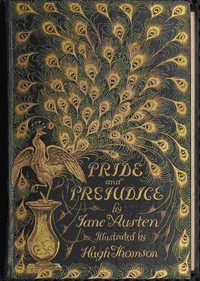
Pride and Prejudice
Jane Austen
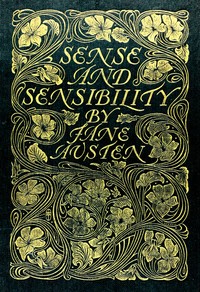
Sense and Sensibility
Jane Austen
Emma
Folio
Emma
Jane Austen
Persuasion
Folio
Persuasion
Jane Austen
Mansfield Park
Folio
Mansfield Park
Jane Austen
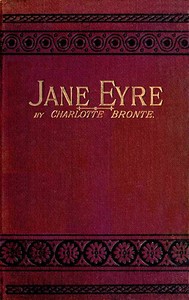
Jane Eyre
Charlotte Brontë
The Tenant of Wildfell Hall
Folio
The Tenant of Wildfell Hall
Anne Brontë
Agnes Grey
Folio
Agnes Grey
Anne Brontë