Edgar Huntly; or, Memoirs of a Sleep-Walker
Folio
Edgar Huntly; or, Memoirs of a Sleep-Walker
by Charles Brockden Brown (1771-1810)
first published 1799 · free to read
length
94,564 words
a few pages a day
~8 min
finished in
50 days
full read
6h 34m
At Folio's default of ten pages a day, you finish Edgar Huntly; or, Memoirs of a Sleep-Walker in about 50 days — roughly 8 minutes of reading each morning.
The opening
the first pages of Edgar Huntly; or, Memoirs of a Sleep-Walker, free
The flattering reception that has been given, by the public, to Arthur Mervyn, has prompted the writer to solicit a continuance of the same favour, and to offer to the world a new performance.
America has opened new views to the naturalist and politician, but has seldom furnished themes to the moral painter. That new springs of action and new motives to curiosity should operate,--that the field of investigation, opened to us by our own country, should differ essentially from those which exist in Europe,--may be readily conceived. The sources of amusement to the fancy and instruction to the heart, that are peculiar to ourselves, are equally numerous and inexhaustible. It is the purpose of this work to profit by some of these sources; to exhibit a series of adventures, growing out of the condition of our country, and connected with one of the most common and most wonderful diseases or affections of the human frame.
One merit the writer may at least claim:--that of calling forth the passions and engaging the sympathy of the reader by means hitherto unemployed by preceding authors. Puerile superstition and exploded manners, Gothic castles and chimeras, are the materials usually employed for this end. The incidents of Indian hostility, and the perils of the Western wilderness, are far more suitable; and for a native of America to overlook these would admit of no apology. These, therefore, are, in part, the ingredients of this tale, and these he has been ambitious of depicting in vivid and faithful colours. The success of his efforts must be estimated by the liberal and candid reader.
C. B. B.
Chapter I.
I sit down, my friend, to comply with thy request. At length does the impetuosity of my fears, the transports of my wonder, permit me to recollect my promise and perform it. At length am I somewhat delivered from suspense and from tremors. At length the drama is brought to an imperfect close, and the series of events that absorbed my faculties, that hurried away my attention, has terminated in repose.
Till now, to hold a steadfast pen was impossible; to disengage my senses from the scene that was passing or approaching; to forbear to grasp at futurity; to suffer so much thought to wander from the purpose which engrossed my fears and my hopes, could not be.
Yet am I sure that even now my perturbations are sufficiently stilled for an employment like this? That the incidents I am going to relate can be recalled and arranged without indistinctness and confusion? That emotions will not be reawakened by my narrative, incompatible with order and coherence? Yet when I shall be better qualified for this task I know not. Time may take away these headlong energies, and give me back my ancient sobriety; but this change will only be effected by weakening my remembrance of these events. In proportion as I gain power over words, shall I lose dominion over sentiments. In proportion as my tale is deliberate and slow, the incidents and motives which it is designed to exhibit will be imperfectly revived and obscurely portrayed.
Oh, why art thou away at a time like this. Wert thou present, the office to which my pen is so inadequate would easily be executed by my tongue. Accents can scarcely be too rapid; or that which words should fail to convey, my looks and gestures would suffice to communicate. But I know thy coming is impossible. To leave this spot is equally beyond my power. To keep thee in ignorance of what has happened would justly offend thee. There is no method of informing thee except by letter, and this method must I, therefore, adopt.
How short is the period that has elapsed since thou and I parted, and yet how full of tumult and dismay has been my soul during that period! What light has burst upon my ignorance of myself and of mankind! How sudden and enormous the transition from uncertainty to knowledge!
But let me recall my thoughts; let me struggle for so much composure as will permit my pen to trace intelligible characters. Let me place in order the incidents that are to compose my tale. I need not call on thee to listen. The fate of Waldegrave was as fertile of torment to thee as to me. His bloody and mysterious catastrophe equally awakened thy grief, thy revenge, and thy curiosity. Thou wilt catch from my story every horror and every sympathy which it paints. Thou wilt shudder with my foreboding and dissolve with my tears. As the sister of my friend, and as one who honours me with her affection, thou wilt share in all my tasks and all my dangers.
Keep going from exactly here — Folio remembers your place and serves the next portion tomorrow.
continue reading Edgar Huntly; or, Memoirs of a Sleep-WalkerAbout this free edition
Edgar Huntly; or, Memoirs of a Sleep-Walker by Charles Brockden Brown (1771-1810) is free to read in full. Folio serves it in daily portions you can actually finish, tracks your streak and reading position across devices, and reads every page aloud with a built-in narrator. The text comes from Project Gutenberg.
More like Edgar Huntly; or, Memoirs of a Sleep-Walker
Wieland; or, The Transformation
Folio
Wieland; or, The Transformation
Charles Brockden Brown
Arthur Mervyn; or, Memoirs of the Year 1793
Folio
Arthur Mervyn; or, Memoirs of the Year 1793
Charles Brockden Brown
Ormond; or, The Secret Witness
Folio
Ormond; or, The Secret Witness
Charles Brockden Brown
Dracula
Bram Stoker
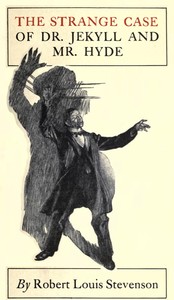
The Strange Case of Dr. Jekyll and Mr. Hyde
Robert Louis Stevenson
The Turn of the Screw
Folio
The Turn of the Screw
Henry James

The Picture of Dorian Gray
Oscar Wilde
The Fall of the House of Usher
Folio
The Fall of the House of Usher
Edgar Allan Poe