Cynthia
Folio
length
71,278 words
a few pages a day
~8 min
finished in
38 days
full read
4h 57m
At Folio's default of ten pages a day, you finish Cynthia in about 38 days — roughly 8 minutes of reading each morning.
The opening
the first pages of Cynthia, free
My first acquaintance with Mr. Merrick's engaging and stimulating muse was made in the pages of Violet Moses, an early work, which appeared, I remember, in three volumes. Reading it again in the light of my appreciation of what its author has done since, I think of it now as I felt of it then. It has great promise, and though its texture is slight its fibres are of steel. It shows the light hand, which has grown no heavier, though it has grown surer, the little effervescence of cynicism, with never a hiccough in it, the underlying, deeply-funded sympathy with real things, great things and fine things, and the seriousness of aim which, tantalisingly, stops short just where you want it to go on, and provokes the reader to get every book of Mr. Merrick's as it appears, just to see him let himself go--which he never does. He is one of the most discreet dissectors of the human heart we have.
In Violet Moses Mr. Merrick avoided the great issue after coming up against it more than once. So did he in The Quaint Companions, a maturer but less ambitious study. I don't know why he avoided it in Violet's case, unless it was because he found it too big a matter for his light battery. In the Companions' case I do know. It was because he came upon another problem which interested him more, a problem with a sentimental attraction far more potent than any he could have got out of miscegenation. The result was the growth, out of a rather ugly root, of a charming and tender idyll of two poets, an idyll, nevertheless, with a psychological crux involved in its delicate tracery. All this seems a long way from Cynthia, which is my immediate business, but is not so in truth. In Cynthia (which, I believe, followed Violet) you have a problem of psychology laid out before you, and again Mr. Merrick does not, I think, fairly tackle it. But he fails to tackle it, not because it is too big for his guns, as Violet's was, and not because he finds another which he likes better, as he did when he was upon The Companions, but because, I am going to suggest, he found it too small. He took up his positions, opened his attack, and the enemy in his trenches dissolved in mist.
The problem with which Cynthia opens is the familiar one of the novelist, considered as such, and as lover, husband, father and citizen. Now it's an odd thing, but not so odd as it seems at first blush, that while you may conceive a poet in these relations and succeed in interesting your readers, you will fail with a novelist. I cannot now remember a single interesting novel about a novelist. There is Pendennis of course; but who believes that Pen was a great novelist, or cares what kind of a novelist he was? Who cares about Walter Lorraine? Would anybody give twopence to read it? The reason is that in the poet the manifestations of literary genius are direct and explicit--some are susceptible of quotation, some may be cut out with the scissors--while in the novelist they are oblique and implied. Humphrey Kent in Cynthia is in no sense an explicit genius; we are not, in fact, told that he was a genius at all. His technique seems to have been that of Mr. George Moore, then rather fashionable. The book puts it no higher than this, that the hero, with an obvious bent for writing, marries in a hurry and then finds out that he cannot be an honest man and support his wife and child by the same stroke. It is not whether he can be a good novelist and a good lover too, but whether he can be a good novelist and pay his bills. That's not very exciting, though George Gissing in New Grub Street drew out of it a squalid and miserable tale which, once begun, had to be finished. Luckily, in Cynthia, Mr. Merrick finds a secondary theme, and handles it so delicately and so tenderly that the book has an abiding charm because of it. That theme is the growth of Cynthia's soul.
Keep going from exactly here — Folio remembers your place and serves the next portion tomorrow.
continue reading CynthiaAbout this free edition
Cynthia by Leonard Merrick (1864-1939) is free to read in full. Folio serves it in daily portions you can actually finish, tracks your streak and reading position across devices, and reads every page aloud with a built-in narrator. The text comes from Project Gutenberg.
More like Cynthia
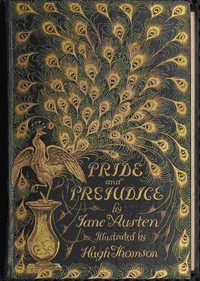
Pride and Prejudice
Jane Austen
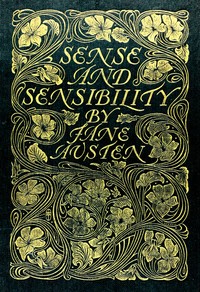
Sense and Sensibility
Jane Austen
Emma
Folio
Emma
Jane Austen
Persuasion
Folio
Persuasion
Jane Austen
Mansfield Park
Folio
Mansfield Park
Jane Austen
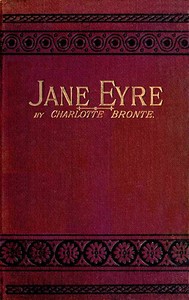
Jane Eyre
Charlotte Brontë
The Tenant of Wildfell Hall
Folio
The Tenant of Wildfell Hall
Anne Brontë
Agnes Grey
Folio
Agnes Grey
Anne Brontë