length
87,514 words
a few pages a day
~8 min
finished in
47 days
full read
6h 5m
At Folio's default of ten pages a day, you finish Cameron of Lochiel in about 47 days — roughly 8 minutes of reading each morning.
The opening
the first pages of Cameron of Lochiel, free
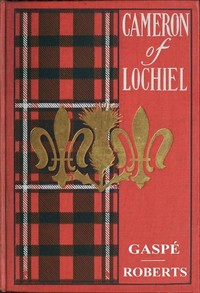
This leisurely and loose-knit romance of de Gaspé's, which he called "Les Anciens Canadiens," has for hero one who was not a Canadian, but a Scotch exile sojourning in Canada. It is on the creation of this character, consistently developed and convincingly presented, that the book must mainly base its claim to be called a work of fiction, rather than a volume of memoirs and folklore. I have ventured, therefore, at the suggestion of my publishers, to take a liberty with the author's title, and name the story after this young Scotch exile, "Cameron of Lochiel." I am the more willing to take this liberty because I feel that de Gaspé has not hitherto been granted the place he is entitled to in the ranks of Canadian fictionists. Considered purely as a romance, it seems to me that the sincerity, simplicity, and originality of this work quite outweigh its sprawling looseness of structure, and make it one of the unique ornaments of the composite literature which we are building up in Canada. If by so changing its title as to emphasize the fictional character of the work I can the better call attention to the worth of de Gaspé's achievement, I feel that I am justified, even in the face of such anticipatory protest as may seem to be implied in the author's too modest introduction.
When all this has been said, however, the fact remains that it was not its many merits as a romance that induced me to translate this work, but the riches of Canadian tradition, folk-lore, and perished customs embalmed in the clear amber of its narrative, coupled with my own anxiety to contribute, in however humble a way, to the increase of understanding and confidence between the two great branches of the Canadian people. It is a beautiful and gracious life, that of old French Canada, as depicted in de Gaspé's lucent pages,--a life of high ideals, and family devotion, and chivalry, and courage. This is an atmosphere it is wholesome to breathe. These are people it is excellent to know; and the whole influence of the story makes for trust and a good understanding.
C. G. D. R.
+Fredericton, N. B.+, May, 1905.
PREFACE.
In Canada there is settling into shape a nation of two races; there is springing into existence, at the same time, a literature in two languages. In the matter of strength and stamina there is no overwhelming disparity between the two races. The two languages are admittedly those to which belong the supreme literary achievements of the modern world. In this dual character of the Canadian people and the Canadian literature there is afforded a series of problems which the future will be taxed to solve. To make any intelligent forecast as to the solution is hardly possible without a fair comprehension of the two races as they appear at the point of contact. We, of English speech, turn naturally to French-Canadian literature for knowledge of the French-Canadian people. The romance before us, while intended for those who read to be entertained, and by no means weighted down with didactic purpose, succeeds in throwing, by its faithful depictions of life and sentiment among the early French Canadians, a strong side-light upon the motives and aspirations of the race.
In spite of the disclaimer with which the author begins, the romance of Les Anciens Canadiens is a classic. From the literary point of view it is markedly the best historical romance so far produced in French Canada. It gathers up and preserves in lasting form the songs and legends, the characteristic customs, the phases of thought and feeling, the very local and personal aroma of a rapidly changing civilization. Much of what de Gaspé has so vividly painted from his boyish reminiscences had faded out of the life upon which his alert eyes rested in old age. The origin of the romance, as given by his biographer, the Abbé Casgrain, is as follows:
When, in 1861, that patriotic French-Canadian publication the Soirées Canadiennes was established, its inaugurators adopted as their motto the words: "Let us make haste to write down the stories and traditions of the people, before they are forgotten." M. de Gaspé was struck with the idea; and seeing that the writers who were setting themselves the laudable task were all young men, he took the words as a summons to his old age, and so the book came to be written.
Keep going from exactly here — Folio remembers your place and serves the next portion tomorrow.
continue reading Cameron of LochielAbout this free edition
Cameron of Lochiel by Philippe Aubert de Gaspé (1786-1871) is free to read in full. Folio serves it in daily portions you can actually finish, tracks your streak and reading position across devices, and reads every page aloud with a built-in narrator. The text comes from Project Gutenberg.
More like Cameron of Lochiel
Pride and Prejudice
Jane Austen
Sense and Sensibility
Jane Austen
Emma
Folio
Emma
Jane Austen
Persuasion
Folio
Persuasion
Jane Austen
Mansfield Park
Folio
Mansfield Park
Jane Austen
Jane Eyre
Charlotte Brontë
The Tenant of Wildfell Hall
Folio
The Tenant of Wildfell Hall
Anne Brontë
Agnes Grey
Folio
Agnes Grey
Anne Brontë