A Voyage to the Moon
Folio
A Voyage to the Moon
first published 1827 · free to read
length
70,321 words
a few pages a day
~8 min
finished in
38 days
full read
4h 53m
At Folio's default of ten pages a day, you finish A Voyage to the Moon in about 38 days — roughly 8 minutes of reading each morning.
The opening
the first pages of A Voyage to the Moon, free
Atterley's birth and education--He makes a voyage-- Founders off the Burman coast--Adventures in that Empire--Meets with a learned Brahmin from Benares.
CHAPTER II.
The Brahmin's illness--He reveals an important secret to Atterley--Curious information concerning the Moon--The Glonglims--They plan a voyage to the Moon.
CHAPTER III.
The Brahmin and Atterley prepare for their voyage-- Description of their travelling machine--Incidents of the voyage--The appearance of the earth; Africa; Greece--The Brahmin's speculations on the different races of men--National character.
CHAPTER IV.
Continuation of the voyage--View of Europe; Atlantic Ocean; America--Speculations on the future destiny of the United States--Moral reflections-- Pacific Ocean--Hypothesis on the origin of the Moon.
CHAPTER V.
The voyage continued--Second view of Asia--The Brahmin's speculations concerning India--Increase of the Moon's attraction--Appearance of the Moon --They land on the Moon.
CHAPTER VI.
Some account of Morosofia, and its chief city, Alamatua --Singular dresses of the Lunar ladies--Religious self-denial--Glonglim miser and spendthrift.
CHAPTER VII.
Physical peculiarities of the Moon--Celestial phenomena --Farther description of the Lunarians--National prejudice--Lightness of bodies--The Brahmin carries Atterley to sup with a philosopher-- His character and opinions.
CHAPTER VIII.
A celebrated physician: his ingenious theories in physics: his mechanical inventions--The feather-hunting Glonglim.
CHAPTER IX.
The fortune-telling philosopher, who inspected the finger nails: his visiters--Another philosopher, who judged of the character by the hair--The fortune-teller duped--Predatory warfare.
CHAPTER X.
The travellers visit a gentleman farmer, who is a great projector: his breed of cattle: his apparatus for cooking--He is taken dangerously ill.
CHAPTER XI.
Lunarian physicians: their consultation--While they dispute the patient recovers--The travellers visit the celebrated teacher Lozzi Pozzi.
CHAPTER XII.
Election of the Numnoonce, or town-constable-- Violence of parties--Singular institution of the Syringe Boys--The prize-fighters--Domestic manufactures.
CHAPTER XIII.
Description of the Happy Valley--The laws, customs, and manners of the Okalbians--Theory of population --Rent--System of government.
CHAPTER XIV.
Further account of Okalbia--The Field of Roses-- Curious superstition concerning that flower--The pleasures of smell traced to association, by a Glonglim philosopher.
CHAPTER XV.
Atterley goes to the great monthly fair--Its various exhibitions; difficulties--Preparations to leave the Moon--Curiosities procured by Atterley--Regress to the Earth.
CHAPTER XVI.
The Brahmin gives Atterley a history of his life.
CHAPTER XVII.
The Brahmin's story continued--The voyage concluded --Atterley and the Brahmin separate--Atterley arrives in New-York.
Appendix: Anonymous Review of A Voyage to the Moon, reprinted from The American Quarterly Review No. 5 (March 1828)
APPEAL TO THE PUBLIC.
Having, by a train of fortunate circumstances, accomplished a voyage, of which the history of mankind affords no example; having, moreover, exerted every faculty of body and mind, to make my adventures useful to my countrymen, and even to mankind, by imparting to them the acquisition of secrets in physics and morals, of which they had not formed the faintest conception,--I flattered myself that both in the character of traveller and public benefactor, I had earned for myself an immortal name. But how these fond, these justifiable hopes have been answered, the following narrative will show.
Keep going from exactly here — Folio remembers your place and serves the next portion tomorrow.
continue reading A Voyage to the MoonAbout this free edition
A Voyage to the Moon by George Tucker (1775-1861) is free to read in full. Folio serves it in daily portions you can actually finish, tracks your streak and reading position across devices, and reads every page aloud with a built-in narrator. The text comes from Project Gutenberg.
More like A Voyage to the Moon
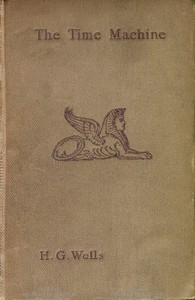
The Time Machine
H. G. Wells

The War of the Worlds
H. G. Wells
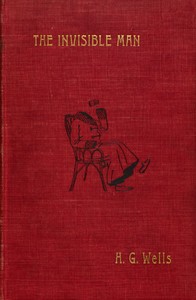
The Invisible Man
H. G. Wells

The Island of Doctor Moreau
H. G. Wells
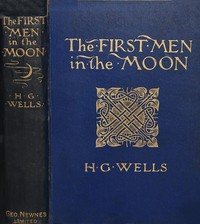
The First Men in the Moon
H. G. Wells
The Sleeper Awakes
Folio
The Sleeper Awakes
H. G. Wells
The Food of the Gods and How It Came to Earth
Folio
The Food of the Gods and How It Came to Earth
H. G. Wells

Frankenstein
Mary Shelley